Managing Viral Misconduct Risk from Cinnabon Outbursts to DoorDash Tampering: #9to5Nightmares ep 20

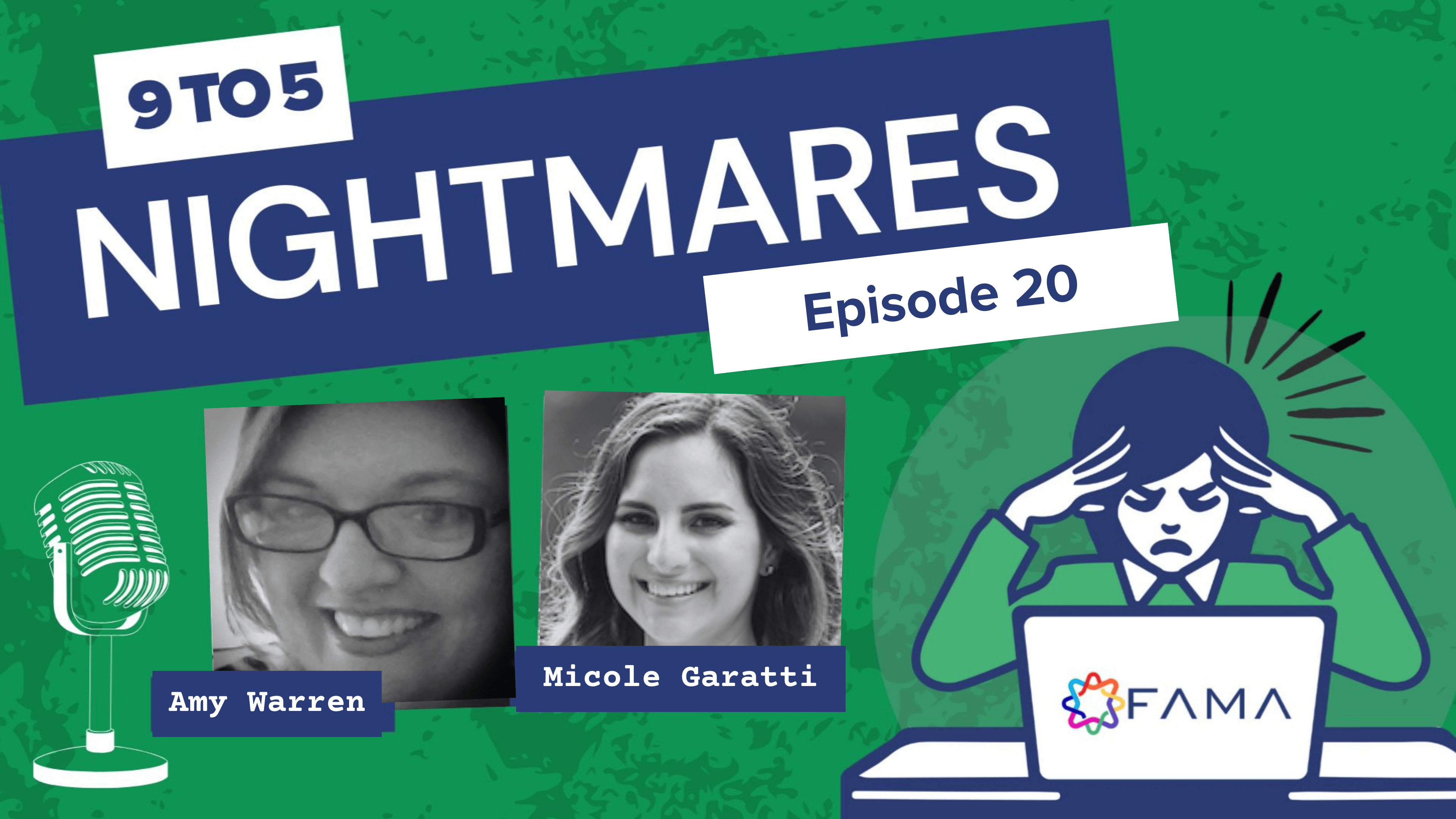
The holiday season often brings increased visibility into employee behavior and with it, increased risk. In this episode of #9to5Nightmares, hosts Amy Warren and Micole Garatti reflect on more than a year of tracking real-world misconduct stories and examine why these incidents are becoming more frequent, more public, and more consequential for employers.
This month’s discussion spans several high-profile cases: a customer-facing employee fired after a racist outburst went viral, a delivery driver facing criminal charges for food tampering, and a senior Air Force official resigning after violent and hateful social media posts surfaced. The episode also highlights a real executive screening case involving misuse of confidential company data underscoring that misconduct risk extends well beyond harassment and into ethics, trust, and insider threats.
As personal and professional lives increasingly overlap online, employers are facing a new reality: behavior that happens outside the workplace can directly impact safety, brand reputation, and profitability.
Amy and Micole discuss why the volume of these incidents is rising, how digital-native workforces are changing risk patterns, and why proactive, consistent screening matters across the entire employee lifecycle.
For organizations focused on building safe, compliant, and trustworthy workplaces, this episode offers timely insight into how misconduct shows up and how it can be identified as it emerges but before it becomes a costly problem.
Let’s get into this week’s #9to5Nightmares.
Cinnabon worker fired after ‘vile’ racist attack on two customers in shocking viral video
A Cinnabon worker in Wisconsin was fired after a racist outburst toward a customer went viral on TikTok. The video shows the worker yelling racist slurs, including the N‑word, and making obscene gestures at a Black Somali Muslim couple. After asking for sauce for their order, the worker yelled, “I am racist and I’ll say it to the whole entire world,” mocked the woman’s hijab, and flipped off the customers. Cinnabon publicly condemned the behavior and terminated the individual. (The Tab)
Viral footage shows DoorDash driver allegedly pepper-spraying customer's food order during delivery
A DoorDash driver is under criminal investigation after viral doorbell camera footage showed the driver allegedly spraying an irritant, believed to be pepper spray, onto a customer’s food order. After a couple bites, the customers experienced burning sensations and illness, prompting them to report the incident to DoorDash and local law enforcement. DoorDash banned the driver from the platform. (Newsweek)
Air Force official resigns after scrutiny of anti-Muslim social media posts
Associate Dean at the Defense Language Institute English Language Center in San Antonio resigned following a public backlash over a series of racist and violent social media posts.
Posts were violent and derogatory toward Muslims and public figures, including:
In post aimed at Muslims protestors: "Mount a machine-gun on the vehicle, pull into an intersection ahead of this crowd and let the weapon do the work." Another told Senator Elizabeth Warren to "Kill yourself for the good of the tribe." Another called Hillary Clinton an "Ignorant witch,” and said “Feel free to exit the planet stage left."
Advocates for his removal noted concerns over national security. A military educator that teaches English to foreign officials who is publicly calling for violence against many of those foreign officials could cause tensions between nations. (San Antonio Express News)
Fama Findings: Screening Highlights Allegations Against Former Executive
A recent Fama screening revealed concerning activity involving a candidate who previously served as an executive at a youth culture research company. During an online search, articles surfaced showing the candidate had been accused of misappropriating proprietary client information for personal gain, including using the company’s confidential client database to secure private consulting work. The individual allegedly shared confidential information with a co-defendant and attempted to delete emails and client data upon resigning, potentially obstructing investigations.
Conclusion
The holidays tend to magnify behavior, for better or worse. What this episode makes clear is that misconduct doesn’t pause for the season, and it doesn’t stay contained to one bad moment. In today’s digital age, it’s not hard for a customer-facing outburst to go viral. Or force resignations of an Air Force official after public calls for violence against people he teaches. Or for news to break after an executive misuses confidential information for personal gain.
These aren’t isolated incidents. They’re part of a growing pattern where poor judgment, misuse of power, and harmful behavior surface publicly often online first before issues are reported to HR. Once that behavior is visible, it becomes more than an HR issue. It becomes a question of safety, trust, and risk for everyone involved.
As we reflect on more than a year of tracking these cases, one trend stands out: the volume is increasing, the consequences are faster, and the line between personal and professional conduct has disappeared in today’s digital age. Whether it’s a frontline role, a public-sector position, or the c-suite, what people say and do publicly now carries lasting implications for their employers.
Early visibility matters. Once misconduct goes viral, the damage has already begun.
If you want to understand how organizations are identifying online behavioral risk earlier and protecting employees, customers, and their reputation, explore Fama’s solutions while you listen.
Catch this episode of #9to5Nightmares on your favorite platform, or watch it below.
9 to 5 Nightmares – Episode Transcript
Amy: Hi everyone. I'm Amy.
Micole: And I'm Micole.
Amy: And this is Nine to Five Nightmares.
Micole: We talk about misconduct so you can avoid it.
Amy: Yes, we do. And we're in the holiday season. And you know what I was thinking about this morning? Ol. I was thinking about how we did this episode last year, and we were talking about the holiday party and how it's infamous for having oh, issues of misconduct. And then I thought to myself, Hey, we've been doing this now for over a year, and we didn't even Yeah. Acknowledge it. Right. So it feels like a year and a half. I know, I know. And for some reason I think it's because we were doing it, we didn't even talk about this on Halloween last year. Now that we can get more into seasonality and we're talking about all of these moments where, you know, misconduct can impact whatever you're doing with seasonality. I was like, oh, we need to take a moment and just acknowledge the fact. That. Thank you everyone for listening to us and you know, I don't wanna say, I hope you enjoy what we have to say because I wish we didn't have to do this podcast, but unfortunately people are people that I think it's gonna be around for a long time. Fortunately,
Micole: I feel like that's gonna be like the, the photo for the featured photo for next year's, just like a. It's all cringe.
Amy: All
Micole: right,
Amy: So starting off with where we are for this month's episode, I'm gonna like to dive right into it because, oh, Cinnabon's got some Starbucks problems. So, you know, they, we talk about this a lot, about your employees. Are gonna show up at work how they're gonna treat your customers. And this whole Cinnabon issue. So for those of you that don't know, a worker in Wisconsin was fired after a video was posted to TikTok showing her hurling race to slurs, um, and doing a, did you watch the video? No, I didn't watch the video. You haven't
Micole: Have you seen it yet? Oh my God, it is. It is absolutely horrific. She's like screaming at people. At one point she flicks them off. She's like screaming, I'm racist. And it was absolutely horrific and they just wanted some extra care, which. You know, I'm a big Caramel fan. I get that. And then to have that as the reaction that's like going from like, like you ever see those like Sour Patch kids commercials where it's like they're salty and they're sweet and then they're like horrific. It was full on like that. Like they just wanted like a Cinnabon and, and then all of a sudden they're just like attacked by this
Amy: woman. Like, well, and you know what, the thing that's, that's so interesting about this, and this is what employers need to be. Aware of this woman, okay, so she did this here, she's going to be looking for work. Yeah. And if you are not, yeah. Screening her public online presence. And let's say you didn't know that this happened, or let's say it's four or five years from now. Yeah. If you have someone who is blatantly saying, I'm a racist, essentially, deal with it. What kind of
Micole: screaming it at your customers while they're trying to purchase a product from your store? In a public place, because usually they're in malls or something.
Amy: What kind of conversation do you have to have with that person if you're gonna hire them again? What are the things that you need to understand and, you know, we always talk about this. I'm a big believer in second chances of redemption and, and everything. But you have to have that conversation and you have to know to have that conversation. Because if this person gets hired in the next couple of years, anywhere that's a customer facing role, even not a customer facing role, this is gonna come up.
Micole: Yeah. Like how is she treating her coworkers? Mm-hmm. How is she treated? Like we know how she treats. Her customers, how does she treat her coworkers? How is she treating, uh, people every day that she meets on the street? How like, and this is all about safe workspaces, right? Whether it's
Amy: For hundred percent Yeah. Or even the employee, right? Everybody has in their code of conduct, you know, behaviors that are appropriate and not appropriate in the workplace. And it goes without saying. If you're gonna stand up in the workplace and scream that you are a racist and treat people, you know poorly. Yeah, the like. Yeah. How does that make a workplace psychologically safe? It doesn't, so, no, it's the holiday season and we're moving on to our next wonderful, wonderful. DoorDash. We've got another DoorDash. We woke up. Stacy, we might, we might need to have just an entire. Moment, a segment of this dedicated to DoorDash, DoorDash, or delivery people.
Micole: Because guess, you know what, I'm a big door dasher. Like, I'm a huge, I'm a huge door dasher. Oh. And if that ever happened to me,
Amy: Who? And then, what happened was, and we, I don't, I don't think I understood why. I don't know if we know the why yet. The DoorDash driver decided to spray people's food with pepper spray.
Micole: Yeah. So she has since come out 'cause she got arrested, she had to show up in court. Like, this is a criminal offense with up to Oh yeah, yeah. Um, I think I read somewhere like up to 10 years in jail for tampering with consumer products and food. Um, the customer said that they had gotten extremely sick and violently ill. Like they felt burning all the way down. They were violently throwing up. Um, after eating a couple bites. Yeah. So she, the woman, shows up to court and says, oh, I was spraying a spider that was on the bag. And it was like, but then tell the customer they can't eat the food and facilitate the customer service process. Don't like to drop it off and let them eat it.
Amy: Um,
Micole: you
Amy: Knowing, Amy wasn't born yesterday. And you were born on a day, but it wasn't yesterday. It wasn't yesterday. And, and I hate to say it, but that might be the claim, but that sounds like a little bit of a light claim of why I did what I did and I'm sure we'll never know. Um, people are strange. Yeah. But if a number one. You're spraying a spider and you're spraying food with a chemical and there's no like thought process to say, Hey, maybe this isn't a good idea, or maybe I should tell somebody, let alone, I don't know, my usual rodent detecting whatever like of choice is not pepper spray, because guess what? When YouPay pepper spray like that, you're making yourself sick.
Micole: You know what? And they don't even know if it's actual pepper spray. They just assumed it was pepper spray. Oh, it, it could be some like, it could, like was reading an article saying it could have been rat poisoning. It could have been something else. It was just assumed based on the video that it was pepper spray. So there's that also.
Amy: This is just why, like it's just, I don't, I don't know. These are like those things that are so far away from anywhere, like I would think, like what are people thinking and they're not thinking, and I don't know what's going on in our job is to say, Hey, this stuff is going on. People are posting about it, and. You need to be aware because no one wants to hire that driver again because whatever their reason was, there was bad judgment here and bad judgment. Oh yeah. Created this whole thing. This thing went viral, right? Oh yeah. And now DoorDash is having a cadence of drivers. Now there's this, there's a drug gate now of driver problems. And just like you and I said, Hey, we're DoorDash customers, right? This makes me a little nervous.
Micole: Well, we're, we're gonna have to start like just designating, like we know there's a police or a military governmental one in, in here every week there. We know that there's like a door, like it's gonna keep happening where there's just gonna be like a solid segment just for DoorDash drivers now.
Amy: Well, and, and as you're saying that, let's get onto military and police because now we've got the Air Force making its presence and Oh, yeah. In a big way, so,
Micole: Oh yeah.
Amy: So we had an official in the Air Force resign after anti-Muslim social media posts. So yeah, this is really, really interesting because. One of them was really promoting violence. Um, oh,
Micole: multiple, multiple messages were, so one of them was talking about, um, like a protest of, um, aimed at Muslim protesters saying mount a machine gun on the vehicle pull. It was just basically like. I'm not even gonna read the whole post, but it was basically like, shoot them dead. He said the same thing about Palestinian processors in the UK. He said, um, he also looped in public figures like, uh, political figures like Elizabeth Warren telling her to, yeah, I saw it. Saw yourself for the good of the tribe. Like that's just like, and then Hillary Clinton, feel free to exit the planet. Sage left. It's just like for one, this guy was working as a high level civilian teaching. People in, like military members in foreign countries, how to speak English and how can you pose if you feel this way about that many groups of people, how can you possibly, like it's a national security threat. Even the military had come out and said, listen, like, and, and uh, civil rights groups were like, how can he be the responsible talking point for people in other countries when he. Has these level of views about people in other countries this point, is it a national security threat
Amy: when you're promoting violence and hate Right against a group? You know, this is a challenge because. In your workplace, there are people that are represented by those groups that you are teaching, that you are doing things with. So you know how, why would you want to take the risk of having somebody like this who's posting these things publicly? Publicly posting these things. Yeah. And how can someone feel safe working with this person or in the classroom with this person, especially the level of violence he's promoting? Like he is noting that you should go and kill people because of who they are. Right. So you know, again, it's another situation where you've got something that's gone viral. Yeah. This person's going to be looking for a job. Yeah. As an employer,
Micole: If you, they're clearly a teacher in education, so are they gonna go to a school and, and try, like, are they gonna go to a university? Are they going to go to a high school? Are they gonna go, like, where are they gonna go?
Amy: And it doesn't take long for students or other people to find this stuff.
Micole: And no. I mean, he resigned within two months of his joining, I think. So it's like within two months he was hired and then all of these posts came out. I mean, we talk a lot about changing demographics in the workforce. Well, that's coming from the school system. And you don't think that kids are gonna find that online in five seconds.
Amy: I know, like
Micole: get those girly FBI agents on there, but get the mom network on there. I know my mom was a letter writer, so you bet your, you bet your, you know, butt. She would've written lots of letters.
Amy: Uh, that's really funny. So I, I think, I think what it all comes down to is. Bottom line number one, since we've been doing this for the last year and a half. When Micole and I used to do this, the cadence of it used to be less. Yeah, we, we did. It would take us about every eight or nine weeks we would see somebody who was being fired for something that they posted online. Now we went from that to. Every month we have multiple things. And now mcc, Micole and I pick from what we're gonna share with you. Yeah. And that just is giving everyone an understanding of what is the drumbeat of this. The drumbeat of this is increasing, increasing, increasing. And it's being driven by a couple of different things. One, the amount and volume of content people are posting. Right. Yeah. How they've incorporated, um, living their lives online with their lives offline. There is really no longer a blurred moment at that. And I think a lot of this has to do with what you just said, you know? Right. How many adults now are digital natives and then are in the workforce? Yeah. And for those of you that don't know what that term is, we use it often. Frequently. It's somebody who was born after the internet was the internet, and so yeah. They've primarily, they've had their life online. If their parents posted pictures of them in the womb prior to even being born. Yeah, which is the thing. So, um, this is something that we're not gonna see change. It's something that we're gonna see continue to get worse. And, and that's why we do what we do at Fama. And in this month, um, we even have something that came up against a former executive. So you wanna share a little bit more about the one that we
Micole: Found?
Micole: Yeah. So when we, um, we did an executive screening and found. Public online record of this person, uh, using confidential company information for personal gain. So he was accessing company databases and then reaching out for private consulting contracts and like sharing the information online and, and including confidential information. And so you can't do that. That's not. That's a complete violation of almost every single employment contract on the planet.
Amy: Well, and you know, the reason that this example, I think is important to highlight is we talk a lot about, um, behaviors that have to do with harassment, violence threats. Right. You know, we don't, but it's more than that, right? We don't spend a lot of time talking about whether it's. Theft or if it's collusion or other things that we're seeing, yeah, you can not just make a dotted line, but a straight line to misconduct behavior that is a violation. Of your employee agreement that's happening. Right. And this is a really good case of it where somebody is using data from their employer Yeah. In a way that they're not supposed to. And not only are they putting it out in public, but they're also profiting off of it. Yeah. And, and these are things that, you know, we talk a lot about how we screen candidates. We also screen, um, current employees too for this kind of thing. And also, yeah, look for harassment and those things. You can kind of catch it first. Um, yeah. But you know, I think that that's just, just really. I would say it puts a really interesting footnote on the entire year for us. As we see all of this increase, we see different kinds of insider threats that are being revealed. Yeah. Whether it's in the pre-employment screening, then you have to ask yourself, what's going on with this person? Is this someone I wanna bring into the workplace? And you know now more than ever who you hire. Yeah. It's probably in a lot of ways more important than what you pay them, what their skills are, because if they behave in this way, the cost to your organization is significant. Absolutely. Sign. Yeah. So yeah, those are my final like parting thoughts on this year of our Nightmares podcast. Um, looking forward to seeing everybody in the new year. I'd love to say, maybe we'll see the behavior decrease, but I know it's not the case.
Micole: Wouldn't we all, Amy, it would be so great if you and I could just, you know, misconduct would stop. We could quit our jobs, move to an island somewhere, drink margaritas on the.
Amy: Well, I, I mean, we do live in Florida, so we kind of get that like a little bit, like a little bit, but you know, to be able to just be, I don't know, I, I think Key West would be my, my pick, honestly. That's your vibe. Mm-hmm. Totally. It's like it's my valley high. All right. Well, I wish everybody a really happy holiday season and. I hope you enjoy whichever holiday it is that you celebrate, um, and a happy new year to everybody and we will see you all in January. So I'm Amy. Okay. I'm Micole, and we talk about misconduct, so you can avoid it. Bye everybody.
Micole: Bye.
Get the Newsletter
Recent Blog Posts
Webinar | Candidate Misrepresentation: How Identity + Behavior Background Checks Improve Hiring

.png)