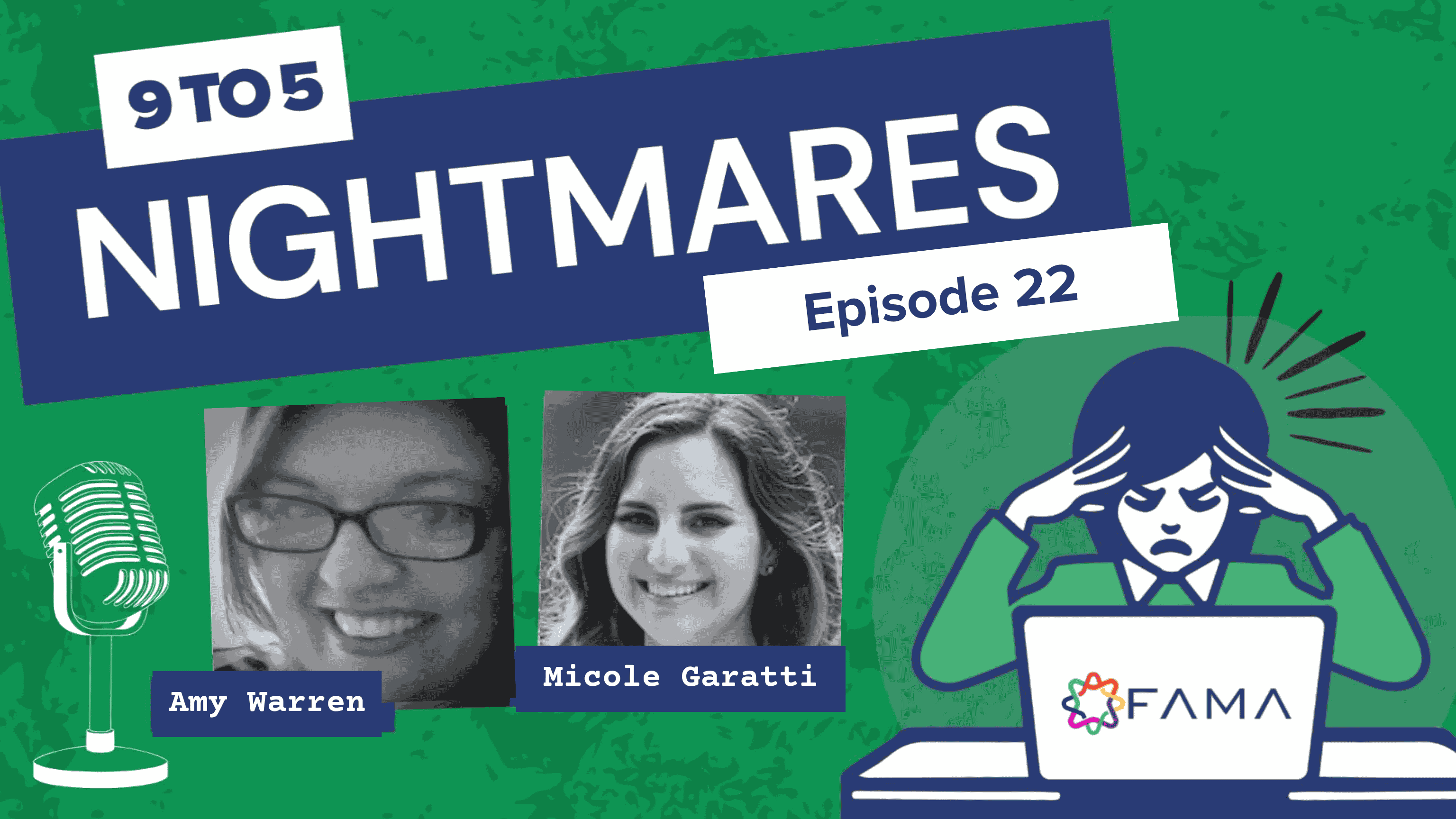
Bad Bunny, Bad Choices, and Bad Hires: #9to5Nightmares ep 22

In 2026, online behavior is posing real-world risks. People, and their employers, are learning the hard way that their behavior online and on social media doesn’t always remain there. From reality TV stars losing contracts over discriminatory comments to healthcare professionals facing criminal scrutiny for viral videos, the digital footprint we leave behind is becoming the ultimate background check.
In this episode, hosts Amy Warren and Micole Garatti dive into the latest trending misconduct scandals, breaking down high-stakes stories where social media behavior led to real-world consequences, including firing, license suspensions, and bribery investigations.
Join us as we explore why HR leaders now view online behavior as a critical "risk signal" for workplace threats and misconduct, and how a single post can turn a career into a cautionary tale.
Ex-RHONY Jill Zarin fired from 'Real Housewives' revival after racist viral video on Bad Bunny’s SuperBowl Halftime Show
We love a good Bravo scandal here at Fama. But, we didn’t love seeing reality TV star Jill Zarin’s racist Instagram video criticizing Bad Bunny’s Super Bowl halftime show. The video quickly spread and led to her being fired from the upcoming E! docuseries The Golden Life and her late-husband’s company, Zarin Fabrics, publicly denouncing her remarks.
Florida Labor and Delivery Nurse fired, lost nursing license after wishing pregnant woman complications on social media
In a viral TikTok, a Boca Raton labor and delivery nurse reacted to the news of White House Press Secretary Karoline Leavitt’s pregnancy by taking pleasure in the thought of her suffering pregnancy complications. The nurse was subsequently fired from her job and Florida suspended her nursing license, calling into question her professional ethics and standards.
Police officer made offensive and discriminatory social media posts and leaked confidential information online
Over half (52%) of business leaders today are concerned younger employees are sharing confidential information online, whether accidentally or purposefully. Earlier this month, reports surfaced of a former Police officer facing a gross misconduct hearing after allegations of social media misconduct. The officer posted “offensive, discriminatory, and inappropriate” content on social media but also shared content in uniform that included sensitive police maps in the background.
Former university dean fired for safety, labor, and departmental non-compliance
A recent Fama screening surfaced a candidate with a long history of misconduct as a former university dean, with public reports showing the candidate continuously violated internal policies, safety protocols, labor laws, and even assault of a female student. This problematic pattern of behavior led to the Electrical and Computer Engineering Department voting “no confidence” during an investigation, signaling they no longer believed he was fit to lead.
Navigating a New Era of Workplace Risk in the Digital Age
As we’ve explored in today’s episode, the "9 to 5" and the "after-hours" digital world are no longer separate entities. Whether it’s a high-profile reality TV star, a healthcare professional, or a public servant, one truth remains constant: how we show up online is seen as a direct reflection of how we will show up at work.
For HR and Talent leaders, these stories aren't just headlines; they are a call to action. In an era where 52% of business leaders are already seeing the fallout of digital indiscretion, waiting for a scandal to go viral is no longer an option. Misconduct rarely happens in a vacuum; it follows a pattern.
That’s where Fama comes in. Our EEOC and FCRA-compliant social media screening helps you identify these risk signals, from discriminatory behavior and harassment to the disclosure of confidential information, long before they become a "nightmare" for your organization. By integrating modern screening into your hiring process, you are both protecting your brand while building a safe, compliant workplace for everyone.
Where to Listen
Ready to dive deeper into the full discussion? You can catch the complete episode of #9to5Nightmares below, or find us on Spotify, Podchaser, or wherever you get your podcast fix.
Don't let your next hire become your next headline. Listen now and learn how to spot the red flags before they move into your office.
For more information on how Fama can help you prevent 9 to 5 nightmares, request a demo today.
Podcast Episode 22 Transcript
Amy Warren: Hi everyone, I'm Amy Warren, and this is 9 to 5 Nightmares.
Micole Garatti: I'm Micole Garatti, and we talk about misconduct so you can avoid it.
Amy Warren: And we have an exciting topic this week. We haven't gotten to talk about Bravo, or Housewives, or anything in a while. Shocking that we're talking about it, and it has to do with misconduct, right? Because, you know, it wouldn't be reality TV, and it wouldn't be Bravo if there wasn't some kind of misconduct in it. And for all of you Bravo fans out there, this is probably nothing new, because all of us are up on the news about what happened with Jill Zarin, and her getting because she made racist comments about Bad Bunny.
Micole Garatti: Yeah, yeah. I mean.
Amy Warren: No. Jill's always been problematic, right?
Micole Garatti: See, it's been, I don't know if I watched, like, the original seasons of New York, but I, or at least it's been a very, very, very long time. So I didn't know, like, I just knew that she was, kind of like a lot, not that most housewives aren't a lot, but that's what I knew about her, so I was disappointed when I saw this. I was just like, for real? You just got your 5-minute comeback, and you haven't even come back yet, and now this?
Amy Warren: And I will say, like, for all of those, like, you know. Housewife fans out there, I am definitely I don't even know what you call it, like, I'm a classic Housewife fan, right? Like, give me the OG New York City and the OG Orange County. Every day of the week, right? Like, I just honestly, I would be totally fine if they all had their own spin-off shows, and I think it's because, like. I feel like the Housewives have kind of replaced, like, old-school soap operas, where they.
Micole Garatti: Yeah.
Amy Warren: On forever and ever and ever and ever, and you just get attached to like, in soap opera time, it used to be attached to a character.
Micole Garatti: Right? And now, we've just replaced the character actor with a real person.
Amy Warren: You know? So I was kind of an ex. I mean, I am excited to see the reboot of New York. But I had the same sentiment that you did. I was like, you're just coming back, like. Like, what are you doing?
Micole Garatti: Right.
Amy Warren: And also, too, like, This whole thing with the Super Bowl, and all of this controversy over it. Part of me is just like, can't we just get over it? Can't, like.
Micole Garatti: You know what?
Amy Warren: Super funny.
Micole Garatti: Like, I haven't heard any.
Amy Warren: What do they do?
Micole Garatti: Right, like, I haven't heard anything about that since, like, a couple days after the Super Bowl, except for these cases where people went off on dumb rants and got themselves fired. Like, this is the only thing we're talking about. So it's like, I don't know, I feel like the whole Super Bowl thing was just, like very targeted outrage to and.
Amy Warren: And sometimes I wonder.
Micole Garatti: Yeah, it's just…
Amy Warren: performative, right? It feels a little performative, right? Like, we're just trying to bait, or something.
Micole Garatti: Yeah, well.
Amy Warren: I hate to say that, like, using things like this for that.
Micole Garatti: You know, play stupid games, win stupid prizes, and now her prize is that.
And not only did she get fired, she got booted from the reboot before filming even started, and she embarrassed her family company, and her late husband's fabric company even came out denouncing her because they have her last name. And so, she had two companies come out and say they don't agree with what she said. And she didn't even make her comeback yet!
Amy Warren: Well, and you know what I think is super interesting, and you bring up a really good point. When people use any kind of social media in a public way to say things that are harassing, that are, in this case, just completely, discriminatory and disparaging, right?
Micole Garatti: not even true. Literally not even true.
Amy Warren: It's not true. This is how fast, like, you don't even have to be a reality star with a platform like this. Like, it goes super fast, you know, anywhere. I mean, or you could be doing something where, like, there are so many instances of people catching balls at baseball games that where they went in front of a kid, or took it from a kid. Right?
Micole Garatti: Yeah.
Amy Warren: And it goes viral so quickly. Yeah. And in this particular case, you've got multiple businesses that are impacted. Right. And it's a really good, like, learning lesson for those of you that are, like, Bravo fans, and you're working in HR, and we know there's a lot of you, because we'll just put it right out there. Every time Micole and I talk about our Bravo love, all of you TA Bravo fans show up and reach out to us, engage with us, talk about it, right? So we know that you're out there. It is not a far step from this kind of behavior and your workplace. It's just.
Micole Garatti: Oh, no.
Amy Warren: It's not.
Micole Garatti: I mean, look at Tom Sandoval, where he made a very horrible personal choice, just like Jill did, and that business didn't end up working out either.
Amy Warren: And look at the other Tom, look at the other Tom, who was caught in the crossfire of it.
Micole Garatti: In each case, there are co-workers, there are investors, there are organizations, there are, there are fans, that were, that are now, all of them are disappointed and impacted by one person
Dumb, discriminatory, hurtful decision to behave the way that they did in public.
Amy Warren: Yeah, and I even think, too, I think about, you know, in the last couple of months, we've seen a number of global banks have to.
Micole Garatti: Oh, yeah.
Amy Warren: and fire people, right? That is at the VP or level. Because of instances where they're disparaging their child's other sports team that they're playing against in a public forum, and they have to hire that person. It was. And also come out and apologize.
Micole Garatti: Yeah.
Amy Warren: Like, right now, we're gonna talk about healthcare stuff, and a hospital, the explosion.
Micole Garatti: Oh, yeah.
Amy Warren: Explosion!
Micole Garatti: Oh, yeah.
Amy Warren: misconduct in hospitals or in healthcare situations is almost becoming an epidemic, whether we've got people recording things that they shouldn't be recording in areas that are deemed private and posting them publicly of patients in just different states of consciousness. Right? Or, on the flip side, like hospitals trying to get ahead of that stuff, and reaching out to patients who they know have been recorded, and trying to offer them.
Micole Garatti: Yeah.
Amy Warren: Thousands of dollars to sign non-disclosure and non, like, litigation agreements. I don't even know if I'm using the right term there. We all understand what I mean. I'm not a lawyer, I might play one on TV, but no.
Micole Garatti: Honestly, I'm still laughing about your epidemic pun, because we're talking about healthcare, so I'm laughing because I'm not even beyond that right now.
Amy Warren: Wear it! I'm laughing right now, but this is, like, super, super serious. Like, if you're someone who's not paying attention to what's happening?
Micole Garatti: Not just in the US, it's in the UK, it's everywhere, and I feel like this is one of those things where once a month, every single month, like, we see law enforcement, which we'll get to, and we see government, we see healthcare. And, yeah, and I mean, this is another one of those cases. A Florida labor and delivery nurse actually, published a video that went viral of her, wishing pregnancy complications on a very well-known public political figure of, I guess, the opposite party of what she believes in. And we've seen this in the past, of all areas of the political spectrum, where somebody will say something, wishing somebody harm. And when you're in the healthcare field. You gotta understand that you literally have an oath to treat. Anybody who comes to you.
Amy Warren: You're speaking in the area, like, you're a labor and delivery.
Micole Garatti: Right. You're publicly wanting, right.
Amy Warren: A woman to have complications with her pregnancy?
Micole Garatti: Yeah, it. yeah.
Amy Warren: Like this, to me, like, it's just beyond. And if you're the hospital that is employing somebody who will go out publicly and say those things. What about your insurance costs? Like, how could you guarantee that this person is going to behave responsibly when your hospital's on the line?
Micole Garatti: Yeah, I mean, and even.
Amy Warren: ill will to somebody. And we know, right, what people post online. The increase of what people are saying online and them taking action in the last year has gone through the roof. We know this from our own research.
Micole Garatti: Yeah.
Amy Warren: It's crazy.
Micole Garatti: Yeah, it's. it just seems to happen over and over again, especially, in areas of discrimination. For example, like. You know, companies have come to us after, for example, a healthcare professional says that they don't want to treat Jewish patients, then the same thing happens to them. They come publicly, or they, you know, don't think that they should treat patients who voted for somebody specific, or they think people should have medical complications because of who they are, what they believe, and in those cases, medical licenses are revoked, the hospitals are liable, or healthcare centers are liable, there's a patient impact, because now those patients that are seeing that person have to find new providers. Like, there's so many different court consequences for these types of things, and.
Amy Warren: I know that you should still be there.
Micole Garatti: Since it's coming.
Amy Warren: The issue, too, is with the shortage.
Micole Garatti: Right.
Amy Warren: Healthcare.
Micole Garatti: Right.
Amy Warren: Laborers, right? They're, there's, like, a whole entire kind of place. I'm not suggesting that people are doing things that are not legal from hiring the right person, making sure they have, like, the right licenses, and all those kinds of things, right? But, you know, you have to think about the speed while speed to hire is important, right, and cost per hire is important, if you don't add what we're doing at Fama, right? And do.
Micole Garatti: Clients are.
Amy Warren: background check or someone, and you're the person that hires that nurse next? Think about your exposure. And right now, the processes that you have in place, I will guarantee, do not tell you that that person did what they did. And if you do have someone go, oh yeah, I've got so-and-so who does a Google search on everybody, so we find that stuff. Well, hey, guess what? You're not compliant. So now, you're opening yourself up to more legal exposure. You need to do this in a way that's EEOC compliant and FCRA compliant.
Micole Garatti: Right.
Amy Warren: So, get ready, because if you didn't do that in a compliant way, and you go back to that person. They can.
Micole Garatti: Yeah.
Amy Warren: Now, you're getting.
Micole Garatti: Yeah.
Amy Warren: From the person who behaved totally irresponsibly that you don't want to hire because your hiring practices were not compliant.
Micole Garatti: Yeah. And that just goes to show the importance of needing an updated employee handbook and an updated code of conduct. You need policies around how your expectations around how employees should behave online and in person, but especially online. You need to be training your people and reminding your people, like, hey, this is going on in the world, but here's, you know, guidelines for our expectations. And this isn't to silence anybody at all, it's to maintain discourse that is positively reflective on both individuals, your customers, your shareholders, and your organization as a whole.
Amy Warren: Like, a safe and healthy workplace.
Micole Garatti: Yeah.
Amy Warren: Everybody wants a workplace where people can go and do their jobs and not be subject to discrimination.
Micole Garatti: Right.
Amy Warren: They're bullying to hate devices.
Micole Garatti: Yeah.Right? Everybody deserves to get home at the end of the day.
Amy Warren: So, let's go move on, right? Because we now have, yet again, what do we have to show up almost every time we do this? What are the police doing? Those that are supposed to be protecting us. How are they behaving in a weird, wild way? I feel like I want to put the Cops Bad Boys song on here, but the Bad Boys are the cops.
Micole Garatti: Are the police, right, right.
Amy Warren: Bad boys, bad boys, what are you gonna do? Don't get yourself on OnlyFans in your uniform!
Micole Garatti: Yeah, or don't go and you know, it's funny, like, I was reading an article the other day, and I think I shared it with you, about how business leaders, like, half of business leaders, are concerned about, social media behavior of employees, because employees are, whether intentionally or not, they're disclosing company secrets on like, they're, like, they're taking pictures of themselves at work, they're taking, like, their, you know, video, like, day in the life, and there's, like, things in the background of those videos that are sensitive company information, that are client confidential client information, that are important government documents that don't need to be shared. And it's an interesting thought that's happening within police departments, because today's case is somebody who not only shared offensive comments online, but also was videoing himself at work, and included videos posted on social media where there's, like, sensitive police maps in the background of photos.
And the videos!
Amy Warren: I just, like. I just wish that people would really be thinking about how they're posting at work, number one, and I feel like this is not just my, like, misconduct hat going on, it's my marketer hat, too.
Micole Garatti: Oh!
Amy Warren: Situationally aware.
Micole Garatti: Yeah.
Amy Warren: And then.
Micole Garatti: Oh, yeah.
Amy Warren: The second part is, you know, when you are in a sensitive role, like your judgment and your situational awareness should be much, much higher. And when you fail at both of those things.
Micole Garatti: Yeah.
Amy Warren: You know, Sometimes you only get one. I mean, when I was an intern.
Micole Garatti: Oh! You're killing it with the puns today.
Amy Warren: I know, and I was, like, that's why I, like, we're talking about police, like, I don't mean it that way. You only get one chance, sometimes. Right?
Micole Garatti: I mean, yeah, when I was an intern, and I first when I it was my my first, like, in-the-office marketing intern role, I was in on a social media team, and one of the first things I learned was if you're gonna take a picture at work, if you're gonna post something at work. You have to check what's in the background of everything. You have to check literally every single detail, because you never know if there's a customer in the background. You never know who, what people are in the background. You don't know what text is in the background. You don't know if some, whatever is going on in the background, it's not just your cute face, it's not just, like, what you're doing on screen. Every single thing in the photo, in the image, in the video, is important and has consequences. And what's interesting to me is. I don't think that people are getting that same, like, this, like, sit-down that I got at the very, like, early on to say, like, you know what I mean?
Amy Warren: Because of scale. Like, honestly, this is what I really.
Micole Garatti: Fair, that's fair, yeah.
Amy Warren: Is that in the past, right, you would only have certain people at an organization that were authorized to do these kinds of things. Now, with everybody with a phone in their pocket, everybody with social media, everybody trying to create a personal brand.
Micole Garatti: Right.
Amy Warren: It's like the wild, wild west, and if you don't to your point earlier, if you don't have a social media policy that speaks.
Micole Garatti: Right.
Amy Warren: Specifically to this, you're not keeping up, and you're right, too. Everybody should be sat down, or there should be some kind of communication around. If you're going to be doing these things, how should you do this, right? So, like, I mean, even this police officer, so they're sharing, like, police maps.
Micole Garatti: Yeah.
Amy Warren: was also saying things that had it was discriminatory content while representing the organization.
Micole Garatti: in uniform.
Amy Warren: Yeah, so.
Micole Garatti: Yeah.
Amy Warren: I think this just, again, like, the choices that people are making, and I think this is the thing that everyone needs to also realize, and this is going to kind of be, like, a two-fold thing, is number one.
People are people.
Micole Garatti: Right? Yeah.
Amy Warren: For as many policies as you have, people are going to either make mistakes, or they're going to purposefully violate it. One of the two, right?
Micole Garatti: Yeah.
Amy Warren: In the cases where, even if people purposefully violate it, right, we always talk about redemption. You know, there has to be a place and space for people to learn from their mistakes, right? Yeah. And for those people that have learned from their mistakes, there has to be opportunity for them, right? So, you know, we want to be able to make sure that we're creating policy that protects the organization. But it also has care and concern about the people. And, you know, in these cases that we talk about a lot, a lot of it is gross, gross negligence, right? Yeah. And gross misconduct. But, there's a whole bunch of these kinds of things that go unreported every single day that are still, like, problematic. And one of the things that FAMA found, in the last month was, we actually were screening for a university dean opening and one of the people that came through, had a long history of misconduct. And some of this was would not like, actually, a lot of this would not have been found, in just, like, a normal background check.
Micole Garatti: But I think, like, the really interesting piece.
Amy Warren: Is that there was such a long history of instances that this is the kind of gross misconduct.
Micole Garatti: Oh, yeah.
Amy Warren: Want to completely avoid it, because somebody's doing this kind of stuff for years, and there were, there were things that also happened to this person where they were reprimanded, and then they continued to behave in that way. That shows a pattern of behavior over time that's likely not to change, and this is exactly what you want to know about. You say, you know what, I think that this, along with other considerations that we have, is probably not a person that's gonna fit well into our culture and avoid those problematic hires. So it's like, it's two sides of the coin, and every situation is different. And, you know, that's part of what everyone does so well, that our heads of talent acquisition, directors of talent acquisition, are setting those standards of what's acceptable and what's not acceptable.
Micole Garatti: Yeah. And just to add fuel to the fire, and that's a pun that you'll understand in, like, three and a half seconds, this person, this candidate that we screened. Actually had a long history of violating safety protocols that nearly caused an explosion at the university. So, and on top of them not following proper protocols in other areas, and, assaulting students on campus, and, violating FMLA laws, and yeah, there was just a history of noncompliance and inappropriate behavior, and like you were saying earlier, while it is important to give people time and space and to learn from their mistakes and grow and take accountability and change. At the point where you've had a long history of.
Amy Warren: Right, you, you know when something… So, this has been a really punny episode. We don't know why, it wasn't intended, but we hope that everyone enjoyed it. And we also hope that in all of this humor, we like to have fun with this, because some of this is just so ridiculous. We hope that everyone is letting it sink in a little bit, making some better choices, and thinking about, you know, putting a social media check that's compliant. Part of their process, and not just for high-visibility hires, but for everybody. Because we know that whether you're the DoorDash driver, the nurse at the hospital, the police officer, or the executive, you all are behaving in a crazy way. It's all going viral, and companies are having to come out and apologize for it all the time. So…
Amy Warren: With that being said, I'm Amy Warren.
Micole Garatti: And I'm Micole Garatti, and we talk about misconduct so you can avoid it.
Amy Warren: And we'll see everybody next time.
Micole Garatti: Bye!
Get the Newsletter
Recent Blog Posts
.jpg)
What is Identity Fraud in Hiring? What HR Needs to Know About Modern Employee Risk
.png)