


The State of Misconduct at Work in 2025: An Industry Benchmarking Report
Fama’s 2025 State of Misconduct Report reveals a 34% rise in workplace risk. See why 1 in 15 screenings surface misconduct and benchmark threats by industry.
Request your free copy!
The water cooler has moved online, along with workplace risk.
Misconduct at work rarely starts in the workplace anymore. Increasingly, the earliest signals appear online. The findings show that misconduct signals are rising and appearing in places many employers did not historically associate with workplace risk.
In 2025, 1 in 15 candidates screened showed high risk patterns of behavior such as harassment, intolerance, violence, and other forms of misconduct, a 34% increase year over year.
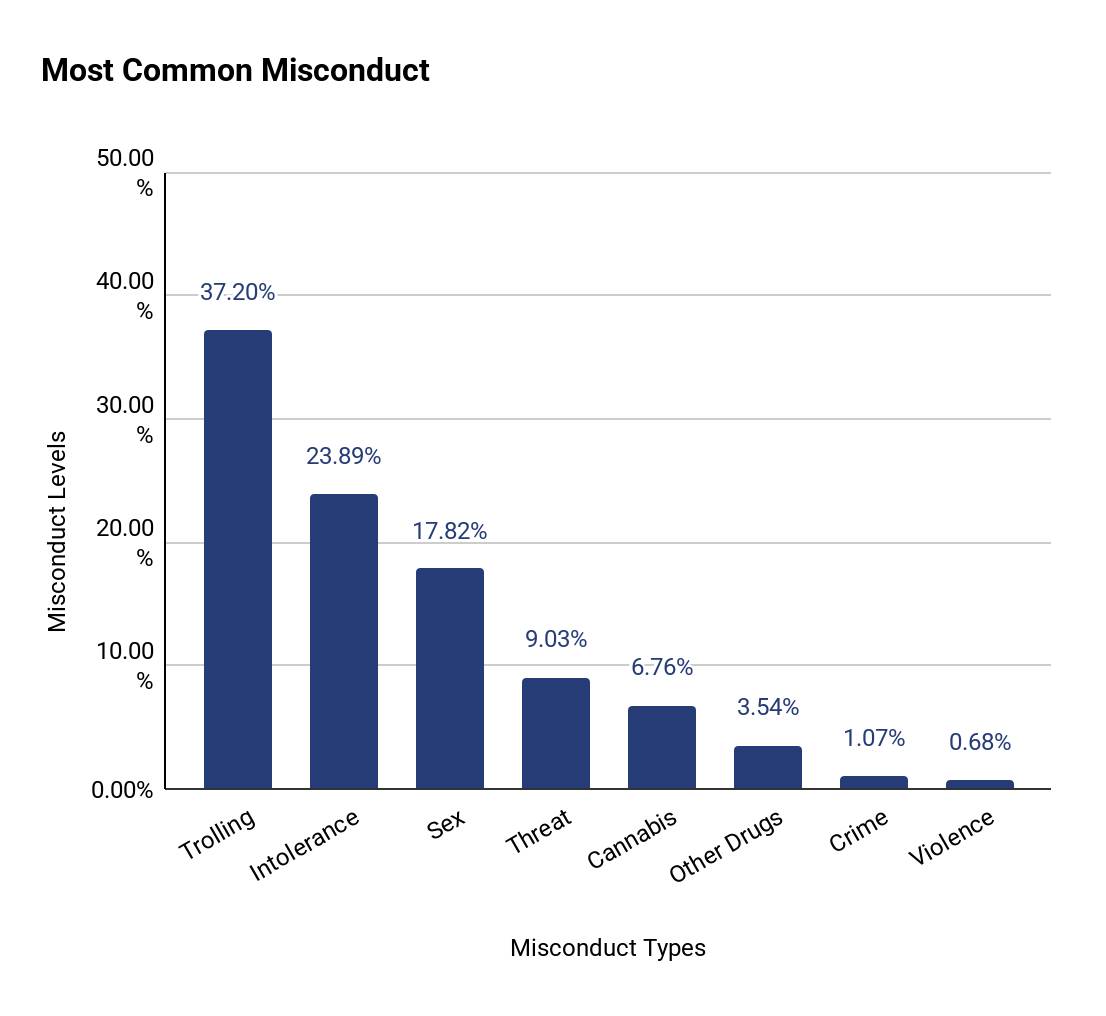
- Online Harassment / Trolling: 37.2% of flagged behavior
- Intolerance: 23.9%
- Sexually explicit misconduct: 17.8%
Industry benchmarks reinforce this risk. The sectors with the highest misconduct rates include media and entertainment (33.6%), technology (16.7%), and consumer services (15.4%), followed by financial services (11.8%), healthcare (11.4%), and manufacturing (11.6%).
These findings highlight a broader reality: behavioral risk often surfaces online before it becomes a workplace issue. For HR and Talent Acquisition leaders, the challenge is not only identifying misconduct, but identifying it early enough to act responsibly and compliantly.
High risk misconduct rising on professional social networks
Over the past year, misconduct flags grew most sharply on LinkedIn and Facebook, platforms commonly used for professional networking and employer engagement. Misconduct signals on LinkedIn increased by nearly 200% year over year, while flags on Facebook rose 100%. Social media platforms also adjusted content moderation policies over time, which contributed to the increase. The watercooler has now become every social media platform where your employees spend time.
What is Misconduct at Work?
Workplace misconduct refers to behaviors that violate an organization’s internal policies, Code of Conduct, or regulatory compliance in a way that harms a workplace. Fama’s out-of-the-box solution surfaces workplace misconduct such as threats and violence, illegal activity, substance use, online harassment, bigotry, and sexually explicit content.
Workplace Misconduct: Key Trends & Findings
The 2025 report reveals three critical trends for employers:
Online behavior continues to pose real-world risks
Misconduct continues to rise online. In 2025, the rate of misconduct was 6.45%, meaning 1 in every 15 screenings surfaced adverse findings. The rate represents a 34% rise year-over-year. On average, adverse reports had 10 hits, down from 18 hits per report last year. We are seeing more misconduct in general but fewer incidents of misconduct per report.
Misconduct risk is not the same across sectors
Misconduct benchmarks empower leaders to transform screening data into actionable insights. Compare internal results against industry norms to identify behavioral trends, streamline risk mitigation, and deploy strategies designed for your specific sector.
This report benchmarks 9 major sectors:
- Business Services
- Consumer Services
- Education
- Financial Services
- Government & Non-Profit
- Healthcare
- Manufacturing
- Media and Entertainment
- Technology
Top Workplace Threats in 2025
Risk is changing year to year. Understanding what high-risk behaviors are most common can help employers put the right policies, training, and screening technology in place to proactively manage these risks. Notably Trolling and Intolerance see the highest hit rates.
How Can HR and Talent Acquisition Leaders Address Misconduct at Work?
Effectively managing employee risk in 2026 requires screening for the same misconduct you’ve always cared about, but focused where it’s now most likely to appear: online.
As professional identities become inseparable from digital footprints, organizations must modernize their risk management strategies to remain vigilant. Today, a candidate's behavior on platforms like LinkedIn and Facebook, which play a central role in recruiting and employer branding, directly impacts your Quality of Hire.
Why Talent Strategies Must Evolve?
Hiring the right people has always meant looking beyond a résumé. It requires understanding how an individual represents themselves and interacts with others before they ever walk through your doors. When misconduct signals appear on professional or public platforms, they are closer to hiring decisions and workplace interactions than ever before.
To address these emerging threats and the potential for "viral risk," HR and Talent Acquisition leaders should shift toward a proactive approach:
- Screen where misconduct appears: Monitor the digital spaces where professional and public lives intersect, such as LinkedIn and Facebook.
- Move beyond the "one-and-done" model: Recognize that risk is dynamic and requires more than just a single, pre-employment check.
- Prioritize compliance: Utilize policy-aligned processes and expert third-party solutions to ensure screening is fair, legal, and consistent.
The industry benchmarks and behavioral insights in this report provide the essential starting point for organizations ready to modernize their approach to workplace risk and protect their brand reputation.
How Does Compliant Social Media Screening Reduce Misconduct at Work?
One of the best ways to surface online risks is through compliant social media screening. Fama filters through 10,000 online sources plus LinkedIn, Facebook, Instagram, X (Twitter), Bluesky, YouTube, TikTok, and Reddit to identify high risk misconduct online often before HR even knows there’s an issue. We highlight costly misconduct such as violence, harassment, and fraud so employers can make data-driven employment decisions. We’re FCRA, EEOC, and SOC2 compliant, and integrate with major HRIS, ATS, and background check solutions.
Quality of hire isn’t just about skills; it’s about the viral risk an individual's public behavior can create for your organization.
Complete the form below to download the full report and access the complete industry benchmarks.